Book Factory Café · the first chapter, free

40 Days to Spiritual Combat

by Roger Daniel Grubb
Press Listen at the bottom of the screen to hear it read aloud. The page follows the narrator.

For everyone still in the fight.

You are in a war. You did not enlist, you were not consulted, and you cannot opt out. You were born onto the field.

Most books about the saints will leave you inspired and stuck. You read the story, you feel something — those were remarkable people — and then you close the book and nothing in your actual life is different. The temptation is still there tomorrow. The habit still wins on Friday night. You still don’t know what to do.

This book was built to close that gap.

It is a field manual, not a highlight reel. For forty days, one saint who fought the devil — and won — will teach you one of the enemy’s tactics, one weapon to beat it, and one thing to do today. Not someday. Today. These men and women were not made of different material than you. They were tempted, harassed, terrified, and worn down, exactly as you are. The difference is that they learned how to fight. And they left the playbook behind.

Why forty days. Forty is the number of the wilderness and of testing. Israel was forty years in the desert. Moses fasted forty days on the mountain. And after His baptism, before He began His mission, Jesus Himself went into the wilderness for forty days — where He was tempted by the devil, and won, answering every attack with the Word of God. A forty-day boot camp against the enemy walks the same road the Lord walked first. That is why this book is built for Lent — the Church’s own forty days in the desert, from Ash Wednesday toward Easter. Start it on Ash Wednesday and you’ll be commissioned right as Holy Week begins. But the enemy doesn’t keep a liturgical calendar, and neither does this fight. Any forty days you begin, you begin in good company.

The saints in these pages were beaten in the desert, tormented for decades, chained by addiction, hunted, imprisoned, and killed. Some never saw their struggle end in this life. One of them relapsed until the day he died — and is a saint anyway. Their witness is not “be impressed by us.” It is “here is how the fight is won, and here is your next move.”

Stop reading about the saints. Start training with them.

How to Use This Field Manual

One day at a time. Read one entry a day, in order, for forty days. Don’t rush ahead. The point is not to finish the book; the point is to be changed by it, and change happens in reps, not sprints.

Every day has the same parts:

• The Saint & the Battle — the saint’s real encounter with the enemy’s attack.

• The Enemy’s Playbook — his tactic, named in one line so you’ll recognize it when it’s used on you.

• Where This Hits You — how that exact tactic shows up in an ordinary modern life.

• Your Weapon — the counter the saint used, and why it works.

• How to Wield It — the concrete, tactical steps for using it.

• The Word — Scripture to carry into the fight.

• Today’s Drill — one concrete action you take that day. This is the part that matters most. Do it.

• A Prayer for Today — a prayer in the day’s theme, to pray in your own voice.

• The Battle Cry — a short line to pray when the fight comes. Memorize it. Use it.

Do the drill. Reading the drill is not doing the drill. The whole design of this book is that you act every single day — one small, concrete, real-world move. Skip the drills and you’ve read another inspirational book. Do the drills and you’ve been through basic training.

The forty days move in five phases: first you’re enlisted and shown the war is real; then you learn the enemy’s tactics; then you take up your weapons; then you take those weapons into the real battles — lust, shame, addiction, anxiety, doubt, desolation, anger, fear; and finally you’re sent back out, consecrated and commissioned, to keep fighting for good.

A note on the saints and the sources. Everything here is drawn from the real lives of these holy men and women as the Church has handed them down. Some accounts are historically documented in fine detail; others come to us through centuries of tradition, and where a story is traditional rather than certain, this book says so and keeps the telling honest. And this is a book about fighting the enemy of our souls — never other people, and never those of other faiths. The only adversary here is the one Scripture names: the ancient enemy, already defeated, still prowling.

Forty days. Forty warriors. One good fight.

Enlist.
The War Begins With a Question

Phase I: Enlistment · Struggle: the First Doubt

Before there was a first sin, there was a first question. Today you meet the oldest tactic in the war — and it isn’t a lie you can see coming. It’s a question that makes you stop trusting the One who loves you.

The Saint & the Battle

Eve is not a saint, but she is where the war you’re fighting first drew blood. Picture the garden before anything went wrong. She has everything: God walking with her in the cool of the day, a husband, work that isn’t a curse yet, and a single boundary — one tree, off-limits, and everything else is hers. There is no scarcity. There is no threat. There is only abundance and one line not to cross. Then the serpent shows up, and notice what he does not do. He doesn’t march in with an argument that God is a tyrant. He doesn’t deny God exists. He doesn’t even tell an outright lie — not yet. He asks a question: “Did God actually say, ‘You shall not eat of any tree in the garden’?” Read it slowly. It’s brilliant, and it’s evil. First, he exaggerates — God never said “any tree,” He said one tree. So Eve is now defending a God who suddenly sounds stricter than He is. Second, the question relocates God from Person she trusts to claim she has to evaluate. A moment ago God was a Father she walked with. Now He’s a proposition to be examined, cross-examined, second-guessed. The serpent never has to prove God wrong. He only has to get Eve to treat God’s word as debatable. And she does. Watch her answer: she adds to God’s command (“neither shall you touch it” — God never said that), which means the word is already blurring in her mind. The clear thing has gone fuzzy. Only then does the serpent tell the flat lie — “You will not surely die” — and offer the upgrade — “you will be like God.” But the lie only worked because the question softened the ground first. The bite comes last. The doubt came first. That’s the whole pattern of the Fall, and it’s the whole pattern of your worst days: the enemy rarely starts by getting you to do something. He starts by getting you to wonder whether God really said what God said.

The Enemy’s Playbook

The lie: “Did God actually say that? Are you sure? Maybe you misheard Him.”

Notice the genius of the tactic: it never argues, it only asks. An argument you can rebut. A question just sits there, working. The enemy’s oldest move is to convert God’s clear word into an open question — because a man arguing with a command still respects it, but a man questioning a command has already half-abandoned it. He does it three ways. First, he exaggerates the command until it sounds unreasonable (“God won’t let you have any fun, ever”) so you defend a caricature and lose. Second, he isolates the command from the Person who gave it — turning “my Father told me” into “there’s this rule” — because a rule with no face behind it feels arbitrary and cold. Third, he adds the sweetener: obedience is holding you back from something better. He doesn’t have to make God look evil. He only has to make God look unsure — or make you unsure of what God said. Once the word is fuzzy, the sin is just cleanup. This is why the enemy loves vagueness and hates specifics. As long as God’s word stays a general mood (“be a good person, roughly”), it bends under any pressure. The instant it’s a specific known sentence, it becomes a wall. So he keeps you from ever pinning it down.

Where This Hits You

You’ll know this tactic by the little word maybe. The rationalization creep: you know the thing is wrong, but a voice starts sanding down the edges — maybe it’s not that big a deal, maybe the Church is behind the times on this, maybe God cares more about my happiness than this rule. Nobody handed you a lie. You just got asked enough soft questions that the clear thing went blurry, and blurry is where you cave. The “surely God understands” move: you’re about to do something you’d have called sin a year ago, and the thought arrives fully reasonable — He knows my heart, He wouldn’t want me to be miserable, surely this doesn’t count. That’s the serpent’s exact grammar: Did God really say? The convenient fog: notice how, right before you do something wrong, you suddenly can’t quite remember why it was wrong. That fog isn’t confusion. It’s the tactic. The enemy needs the word unclear, so at the decisive moment you find you’re no longer sure what your Father actually said.

Your Weapon

Your weapon is to know the actual word of God — not the mood of it, not your best guess at it, but the real thing, specific and pinned down. The serpent’s whole attack depends on the word being fuzzy. So make it sharp. When you know exactly what God said, the question “Did God actually say?” has an answer, and the answer ends the conversation: Yes. He did. Here it is. This is why Jesus, in His own desert, didn’t debate the devil — He quoted Scripture, precisely, three times: It is written. He didn’t reason with the temptation. He answered a fuzzy suggestion with a hard sentence. That’s the mechanism. A doubt is a fog; a known word is a wall. You cannot argue a fog into submission, but a fog cannot pass through a wall. The reason so many good men lose here is that they know God generally and the enemy knows Scripture specifically, so in the moment of pressure the specific beats the general every time. The fix is not to feel more certain. Feelings are the fog’s home turf. The fix is to know — to have God’s actual words about your actual struggle stored where you can reach them at 11 p.m. Eve had no Bible to open. You do. The word that was blurry in her mouth can be a blade in yours. But only if you’ve bothered to learn what it actually says.

How To Wield It

• Pin down the specific word for your specific fight — not “be pure” but the actual verse, the actual teaching, in plain sentences you could say out loud.

• Learn to spot the word “maybe” in your own head — when a clear thing suddenly grows a maybe, that’s the serpent’s fingerprint, not new information.

• Answer questions with sentences, not debates — when doubt asks “did God really say?”, don’t argue the feeling; state the word, the way Jesus said “It is written.”

• Refuse to defend a caricature — if the command suddenly sounds insane, check whether the enemy exaggerated it; go back to what God actually said, not the strict version he’s selling you.

• Reconnect the word to the Father — remind yourself it’s not a rule floating in space; it’s my Father, who loves me, telling me the truth.

The Word

“Now the serpent was more crafty than any other beast of the field that the Lord God had made. He said to the woman, ‘Did God actually say, “You shall not eat of any tree in the garden”?’” — Genesis 3:1

“And Jesus answered him, ‘It is written, “Man shall not live by bread alone, but by every word that comes from the mouth of God.”’” — Matthew 4:4

The serpent turned God’s word into a question; the second Adam answered a question with God’s word. The difference between the Fall and the victory is whether you know what your Father actually said.

Today’s Drill

Take the one fight where you keep going fuzzy — the place you always end up saying “maybe it’s not that bad.” Today, pin down the actual word of God on it. Not a vibe. A sentence. Find the specific verse or the specific teaching of the Church, write it on a card or in your phone, and read it out loud once. Say it like it’s true, because it is. You are doing the one thing that shuts down the serpent’s oldest move: you are refusing to let God’s word stay a blurry question. You are making it a hard, known sentence you can pull out the next time the fog rolls in.

Go further: memorize that verse this week, so it’s in your mouth before the enemy is in your ear.

A Prayer for Today

Father, I have let Your word go blurry, and the blur is where I fall.

I have listened to the question — “did You really say?” — and let it soften what You made clear.

Today I choose to know Your word, specific and true, and to trust the One who spoke it.

Remind me that Your commands are not a cage but a Father protecting his child.

When the fog rolls in, put Your word in my mouth before the lie reaches my heart. Amen.

Battle Cry

“I know what my Father said.”

About 11 min left in this chapter

Not ready to stop? Get the next chapter free.

Leave your email and the next chapter of 40 Days to Spiritual Combat lands in your inbox in a minute, with 25% off the rest of the book and its audiobook for a week. You join Roger Daniel Grubb's reader list — theirs, not ours — and can leave it from any mail.

End of the free sample. Enjoying it?

Buy for $4.99 — 85% goes to the author
Tell a friendXFacebookRedditWhatsAppEmail
Readers also read
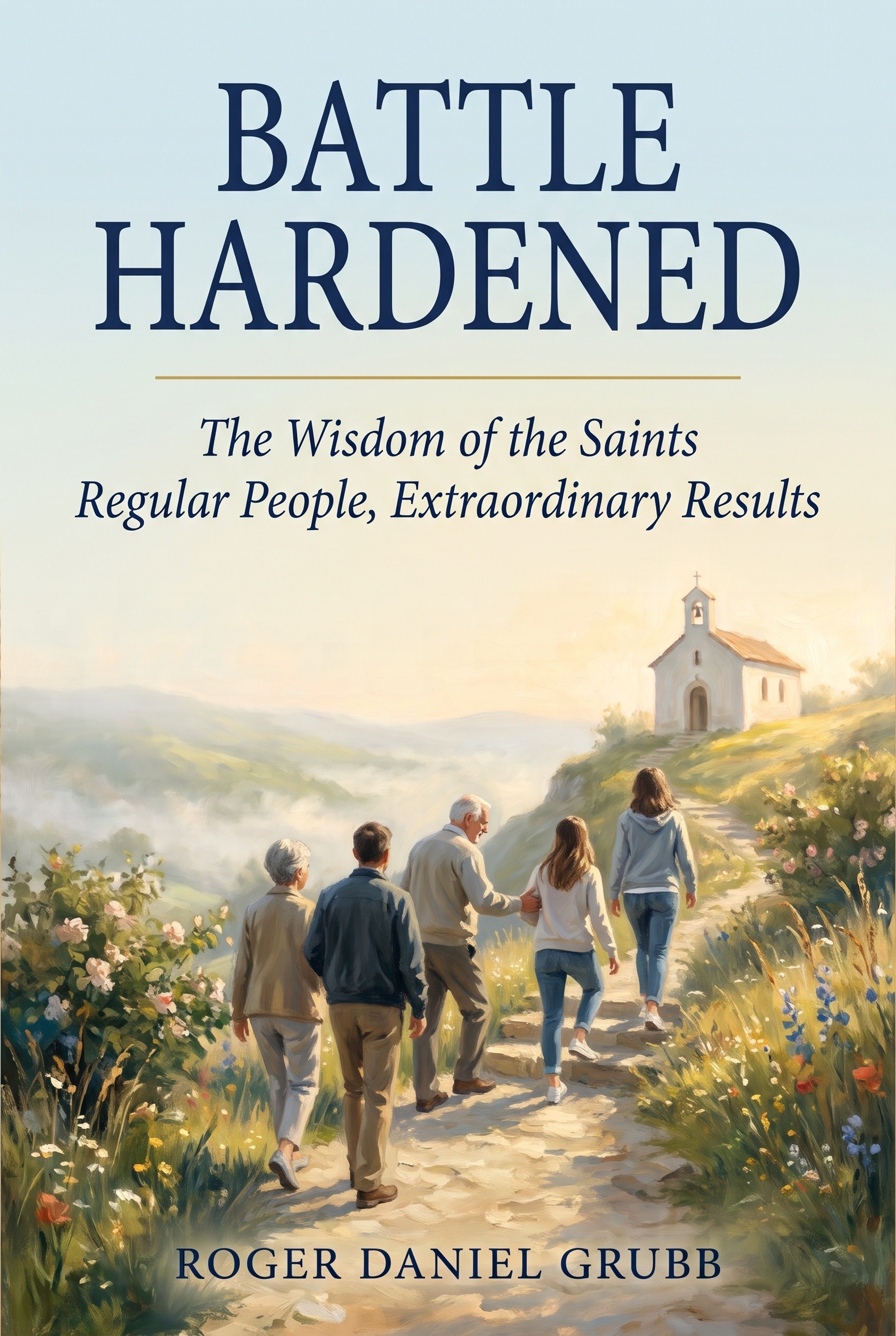
Battle Hardened: The Wisdom of the Saints
Roger Daniel Grubb · 🎧
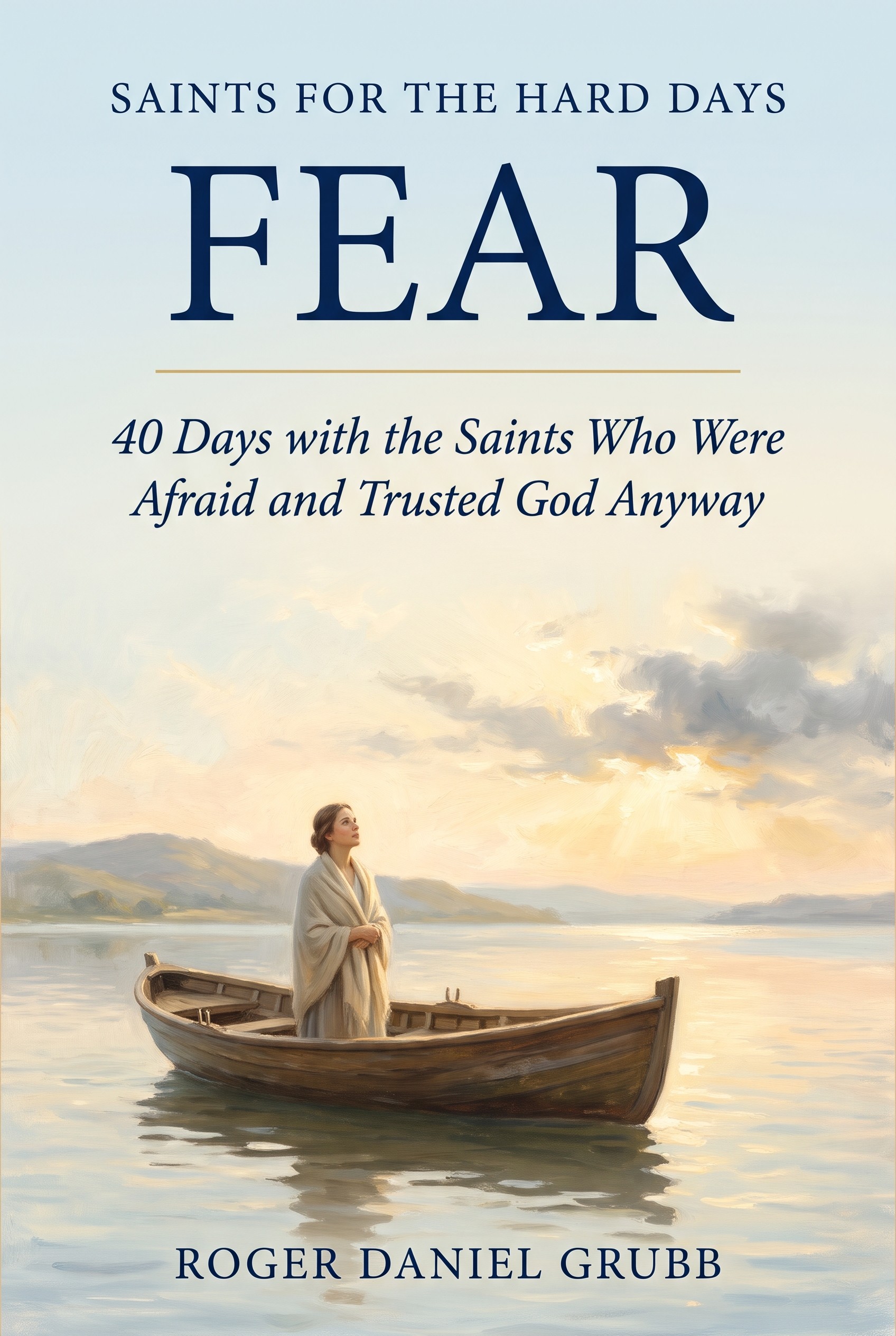
Saints for the Hard Days: Fear
Roger Daniel Grubb · 🎧
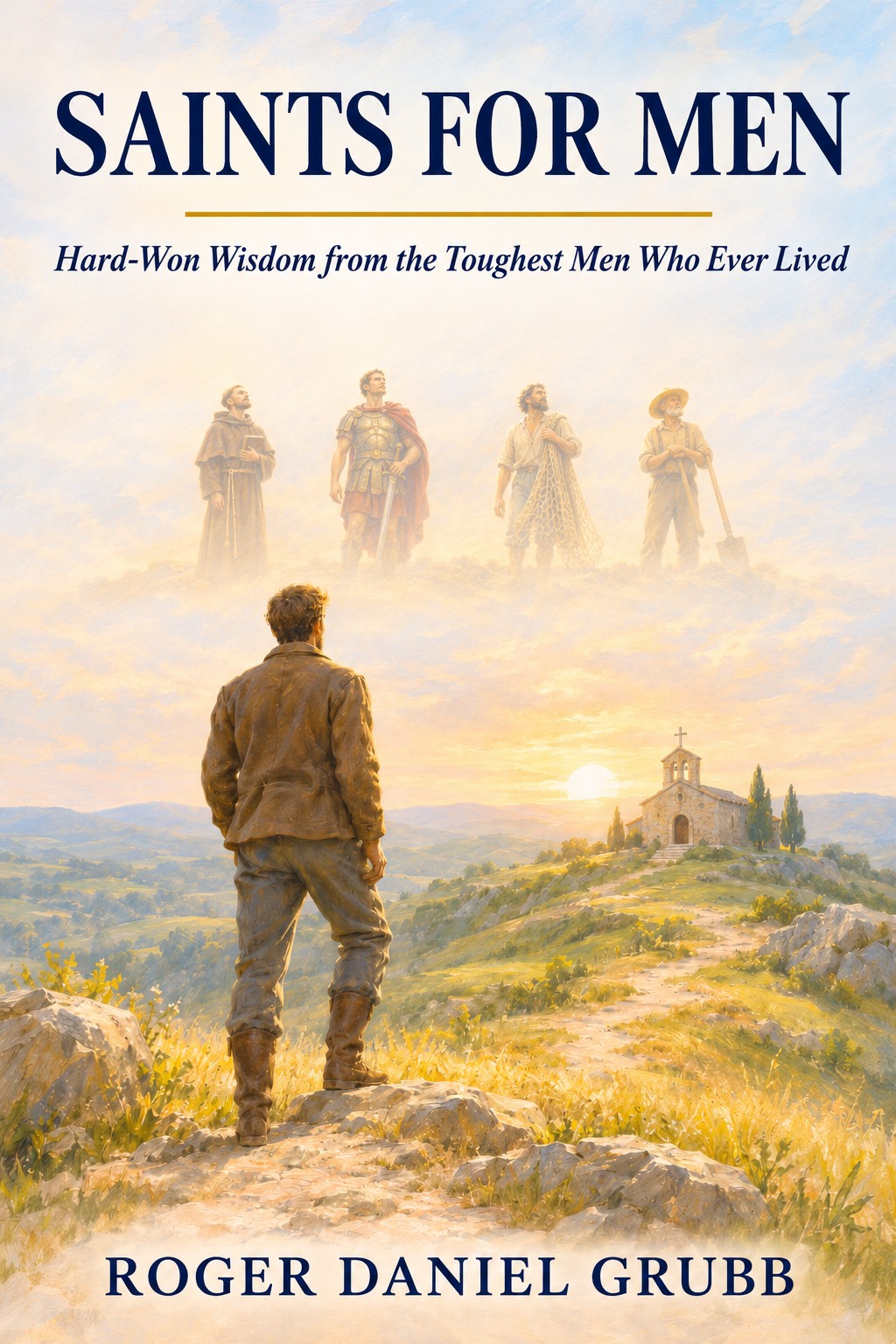
Saints for Men
Saints for Men
Roger Daniel Grubb · 🎧
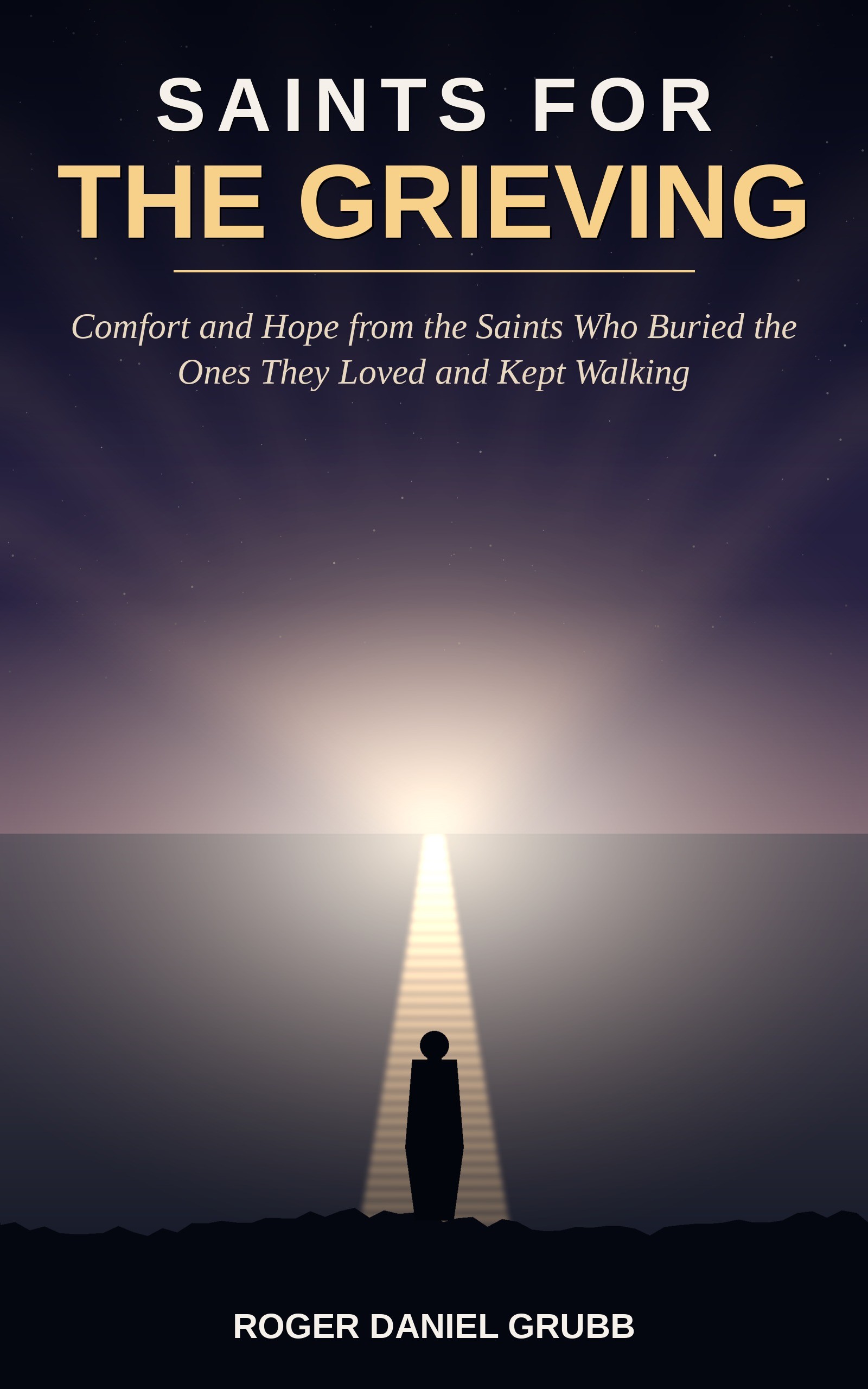
Saints for the Grieving
Roger Daniel Grubb · 🎧
Tell a friendXFacebookRedditWhatsAppEmail